

Email Marketing Tips for Small Businesses
If you’re a local business wondering how to approach email marketing, you’re not alone. Many owners search for email marketing tips for small businesses but feel unsure where to start. The good news? Email remains one of the most reliable, cost-effective ways to grow your audience and drive sales—especially for small business owners in North Palm Beach.
In fact, email marketing delivers an average ROI of $36 for every $1 spent, according to Litmus. That’s a return most advertising channels simply can’t match.
Let’s break this down into clear, practical steps you can apply right away.
Why Is Email Marketing So Powerful for Small Businesses?
What makes email marketing different from social media?
Email marketing is a direct communication channel where you send messages to people who have given you permission to contact them.
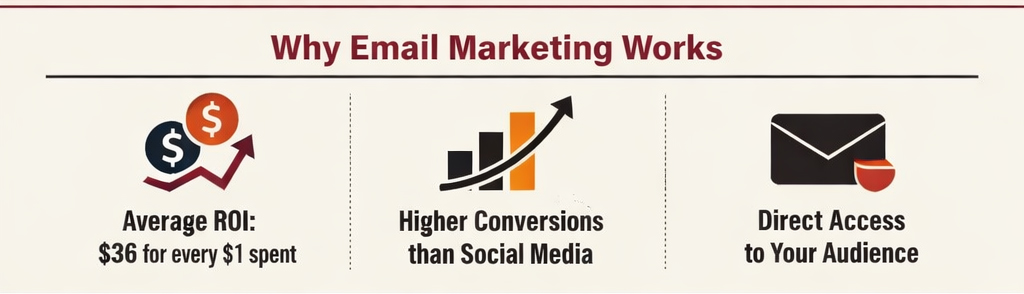
Unlike social media, you own your email list. Algorithms don’t decide who sees your message. Instead, your email lands directly in your subscriber’s inbox.
For example, if you run a café in Palm Beach Gardens and post a special on Instagram, only a fraction of followers may see it. However, if you email your subscriber list, every recipient receives the offer instantly. Depending on list health and open rates (which come with consistency), I’ve seen open rates consistently over 40% for clients.
Email marketing generates higher conversions than social media and direct mail, making it a consistent revenue driver for local brands. [Campaign Monitor]
How Do You Start Growing an Email List?
What’s the first step small businesses should take?
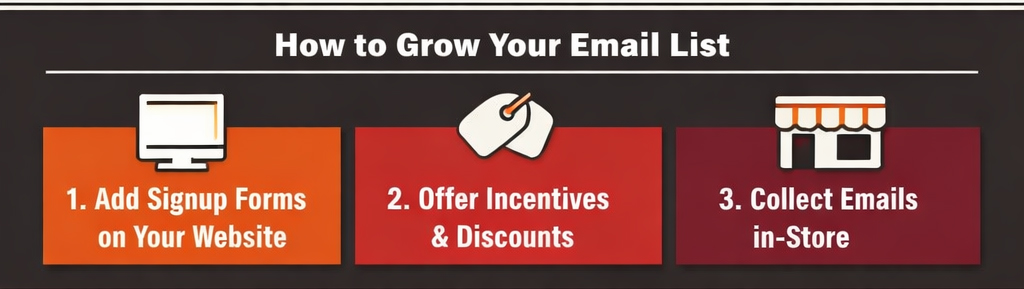
List building means collecting email addresses from people interested in your services. You must actively collect emails on your website and in-store. If you don’t ask, you don’t grow.
Example: Add:
- A homepage pop-up offering 10% off the first purchase
- A “Join Our VIP List” section in your footer
- A checkout box for appointment reminders and promotions
For small businesses, this approach works because local customers value insider updates and exclusive offers. Customers choose to receive emails, it can really build a loyal fan base with the right tone.
What Should You Send Once You Have Emails?
How do you avoid “random” emails?
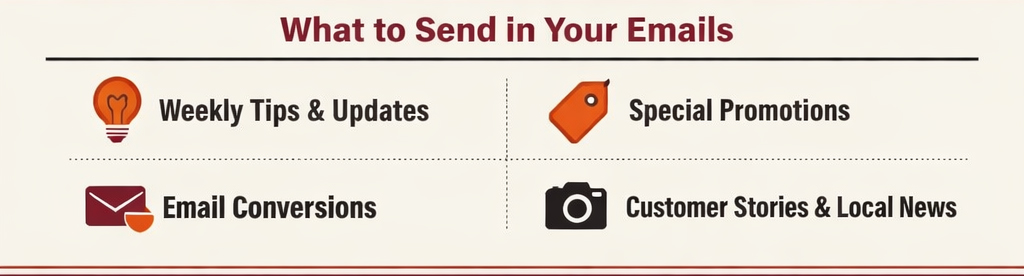
A content calendar can help organize what you send and when you send it.
Instead of emailing sporadically, plan monthly themes, promotions, and educational content in advance. Consistency builds trust and improves engagement.
Example Content Calendar Structure:
- Week 1 – Informational/educational tip related to your service
- Week 2 – Customer testimonial, review, or case study
- Week 3 – Limited-time offer or coupon code
- Week 4 – Community spotlight, staff feature, or behind-the-scenes update
This structure keeps your emails balanced and prevents constant sales pitches.
How Often Should Small Businesses Send Emails?
Is there a “perfect” frequency?
Email frequency refers to how often you contact your list.
Most small businesses benefit from sending 2–4 emails per month. This keeps your brand top-of-mind without overwhelming subscribers. Monitoring your open and unsubscribe rates will give you feedback if your contact list is getting sick of hearing from you.
Example: A local home services company could send:
- One educational maintenance tip
- One promotional reminder
- One seasonal offer
Consistency matters more than volume.
How Does Email Actually Increase Conversions?
Why does email outperform other channels?
Conversion rate measures the percentage of people who take a desired action (purchase, book, call). Many email campaign apps can integrate with your website, giving trackable feedback on these actions.
Email targets warm leads—people who already expressed interest. Therefore, it naturally converts at higher rates than cold advertising.
Email marketing consistently ranks among the highest-performing channels for ROI and engagement. [Hubspot]
Example:
If 1,000 local subscribers receive a limited-time offer and just 5% convert, that’s 50 sales from a single campaign.
That’s predictable, measurable growth.
What Mistakes Should Small Businesses Avoid?
Where do most owners go wrong?
Common mistakes reduce engagement and limit growth. For example, many businesses:
- Skip list-building entirely
- Send only sales emails
- Neglect mobile optimization
- Forget to include clear calls to action
Example Fix:
Instead of ending an email with “Let us know if you need anything,” write:
👉 “Click here to schedule your free consultation today.”
Clarity drives action.
How Can North Palm Beach Businesses Take Action Today?
Here’s your simple starting plan:
- Add at least one email capture form to your website this week.
- Offer a clear incentive (discount, guide, early access).
- Draft a 3-month content calendar.
- Send your first email within 14 days.
Momentum builds confidence. And confidence builds consistency.
Why Trust Misselhorn Media With Your Email Marketing?
At Misselhorn Media, I specialize in helping small business owners in North Palm Beach clarify their messaging and grow their email lists strategically. I’ve worked with several local business on growing their contact lists and running effective email campaigns. Email marketing plans are based on real-world experience, effective marketing frameworks, and data-backed conversion strategies.
The Misselhorn Media approach focuses on clear communication, structured content planning, and measurable results. When you work with Misselhorn Media, you gain a partner who understands local markets, brand positioning, and what actually converts.
If you’re ready to grow your email list and turn subscribers into loyal customers, contact Misselhorn Media build a strategy that works.
Sources
The ROI of Email Marketing (https://www.litmus.com/resources/email-marketing-roi)
Email Marketing Benchmarks and Statistics (https://www.campaignmonitor.com/resources/guides/email-marketing-benchmarks/)
Email Marketing Statistics (https://blog.hubspot.com/marketing/email-marketing-stats)