

Content Marketing Strategies for Local Brands That Actually Work
Local businesses face a unique challenge: standing out in a crowded market while attracting nearby customers. Fortunately, content marketing strategies for local brands can help businesses build trust, improve visibility in search engines, and connect with their communities.
When done correctly, content marketing turns your website and social media into tools that attract customers long before they ever walk through your door.
This guide will explore practical strategies local business owners can use to build a powerful content marketing system.
Why Does Content Marketing Matter for Local Brands?
Content marketing allows businesses to answer questions customers are already searching for online.
Instead of only promoting products or services, you provide helpful information that builds trust.
According to the Content Marketing Institute, 70% of consumers prefer learning about a company through articles rather than advertisements. This means informative content often performs better than traditional ads.
What does this look like in practice?
A local bakery might publish content like:
- “How to Choose the Perfect Birthday Cake”
- “Best Coffee Pairings for Pastries”
- “Behind the Scenes of Our Bread Baking Process”
These posts attract people searching for related topics. Eventually, many of those readers become customers.
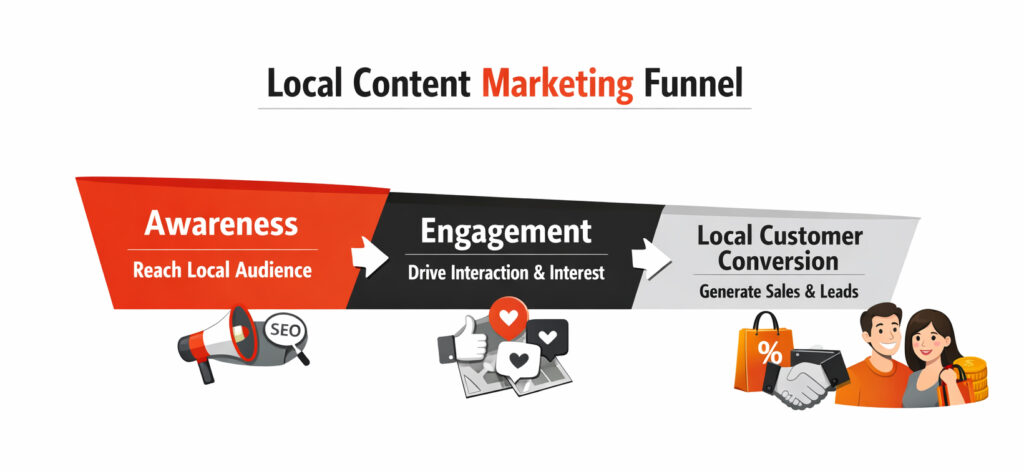
What Are the Most Effective Content Marketing Strategies for Local Brands?
Not every strategy works equally well for local businesses. The most effective approaches focus on local relevance, helpful information, and consistent publishing.
Let’s look at the most impactful strategies.
1. Create Locally Focused Blog Content
Blogging remains one of the strongest content marketing tools for small businesses.
However, local brands should prioritize location-specific content.
This helps search engines understand your service area while helping nearby customers find you.
Examples include:
- Neighborhood guides
- Local event coverage
- “Best of” lists for your community
- Problem-solving articles related to your services
Example
A veterinary clinic might publish:
- “Common Pet Allergies in Florida”
- “Best Dog Parks in Vero Beach”
- “When Should You Take Your Cat to the Vet?”
These posts attract people searching for local information.
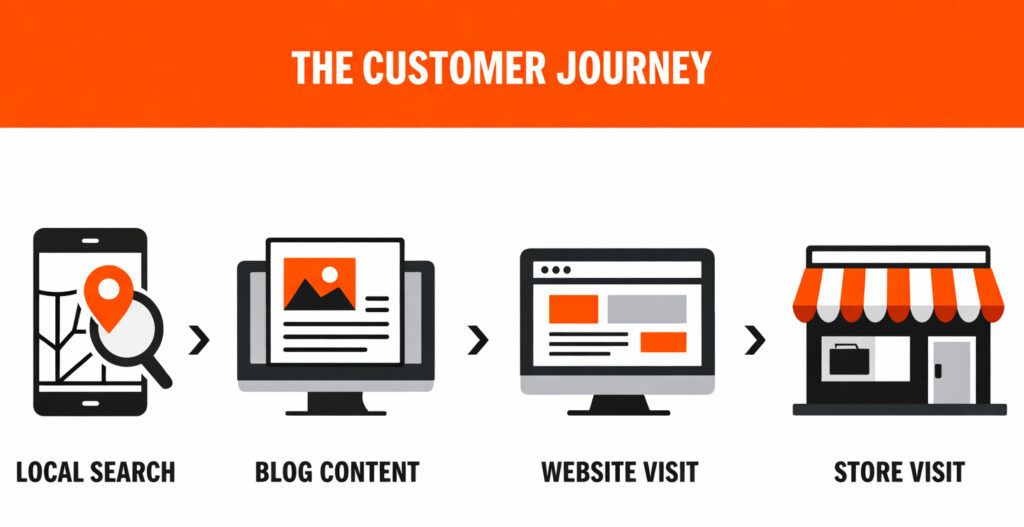
2. Answer Customer Questions With Helpful Content
Many great blog posts come directly from customer questions.
Think about what people ask you every day. Those questions often represent high-value search queries.
Examples include:
- pricing questions
- service comparisons
- troubleshooting problems
- product recommendations
Real-world example
A local HVAC company could publish:
- “Why Is My AC Running Constantly in Summer?”
- “How Often Should Florida Homes Replace Air Filters?”
By answering these questions online, the business attracts homeowners searching for solutions.
3. Use Social Media to Amplify Your Content
Publishing content is only the first step. Promotion drives results.
Social media platforms help distribute content and reach nearby audiences.
Effective tactics include:
- sharing blog posts on Facebook and Instagram
- posting short educational videos
- highlighting customer success stories
- promoting local events
Why does this matter?
Social media increases content visibility while reinforcing brand familiarity.
The more often people see your business online, the more likely they are to trust it.
4. Create Visual Content That Explains Your Expertise
Visual content often performs better than text alone.
This includes:
- infographics
- short videos
- step-by-step guides
- process diagrams
Visual content also increases Pinterest and social media traffic, which many small businesses overlook.
Example
A landscaping company could create:
- seasonal lawn care guides
- before-and-after landscape photos
- irrigation system diagrams
These visuals help customers understand the value of professional services.
5. Build a Local Content Calendar
Consistency matters more than volume.
Instead of posting randomly, successful businesses create a monthly content calendar.
A simple plan might include:
- 2 blog posts per month
- 4–8 social media posts promoting content
- 1 email newsletter featuring recent articles
This approach keeps your brand visible while building a library of helpful information.

How Does Content Marketing Improve Local SEO?
Content marketing and SEO work together.
Every blog post creates a new opportunity to appear in search results.
Specifically, content helps local businesses:
- rank for long-tail keywords
- appear in local searches
- attract backlinks from other websites
- increase website authority
Over time, this improves your visibility across Google.
For example, a plumbing company publishing helpful guides may rank for searches like:
- “how to unclog a drain”
- “water heater problems”
- “plumber near me advice”
Some readers fix the problem themselves. However, many call the company once they realize professional help is needed.
When Should Local Businesses Hire Professional Marketing Help?
While content marketing is powerful, it can also become time-consuming.
Many business owners start strong but struggle to maintain consistent publishing.
Professional help becomes valuable when:
- you don’t have time to plan and write content
- you want to improve SEO performance
- you need a long-term strategy
- your website traffic has plateaued
Marketing professionals bring experience with keyword research, SEO structure, and content strategy, ensuring each article supports broader business goals.
Instead of guessing what might work, you follow a proven plan designed to attract local customers.
Start Small and Stay Consistent
Content marketing doesn’t require massive budgets or complicated strategies.
Local businesses often succeed by focusing on three simple principles:
- Answer customer questions
- Create locally relevant content
- Publish consistently
Over time, these efforts build authority, trust, and search visibility.
Most importantly, they help your business become the go-to resource in your community.
FAQ Section
What is content marketing for local businesses?
Content marketing for local businesses involves creating helpful online content—such as blogs, videos, and social posts—that attract nearby customers searching for related services or information.
How often should local businesses publish content?
Most small businesses benefit from publishing 1–4 blog posts per month. Consistency matters more than frequency.
Does content marketing help local SEO?
Yes. Content marketing improves local SEO by targeting search queries, building website authority, and increasing opportunities to rank in search results.
What types of content work best for local brands?
Effective formats include:
- blog posts
- how-to guides
- local event coverage
- FAQs
- short videos
- infographics
Can small businesses do content marketing themselves?
Yes, but many owners struggle with time and consistency. Professional marketing help can improve strategy, keyword targeting, and SEO performance.
At Misselhorn Media, we help small businesses develop content marketing strategies that actually attract customers.
Rather than producing random blog posts, we focus on strategic content built around search intent, local visibility, and long-term growth.
Our approach combines:
- keyword research
- SEO-driven content planning
- engaging blog writing
- local search optimization
Every piece of content supports a larger marketing strategy designed to increase visibility, traffic, and leads.
Most importantly, we prioritize clarity, quality, and attention to detail, ensuring businesses present themselves professionally while connecting with their local audience.
Sources
Content Marketing Institute Research: B2B Content Marketing Benchmarks (https://contentmarketinginstitute.com)
HubSpot State of Marketing Report (https://blog.hubspot.com/marketing/state-of-marketing)
Local SEO Ranking Factors Study (https://whitespark.ca/local-search-ranking-factors)
Google Search Central: SEO Starter Guide (https://developers.google.com/search/docs/fundamentals/seo-starter-guide)