

Choosing the Right Digital Marketing Channels for Your Business
Every business wants more customers, but not every digital marketing channel delivers the same results. While one company might grow quickly through local SEO, another may benefit more from email marketing or paid advertising.
The challenge isn’t simply marketing online—it’s choosing the right combination of channels that matches your audience, budget, and goals.
Instead of trying every new platform that appears, successful businesses focus on the channels that consistently reach their ideal customers.
Let’s look at how to make smarter marketing decisions.
What Are Digital Marketing Channels?
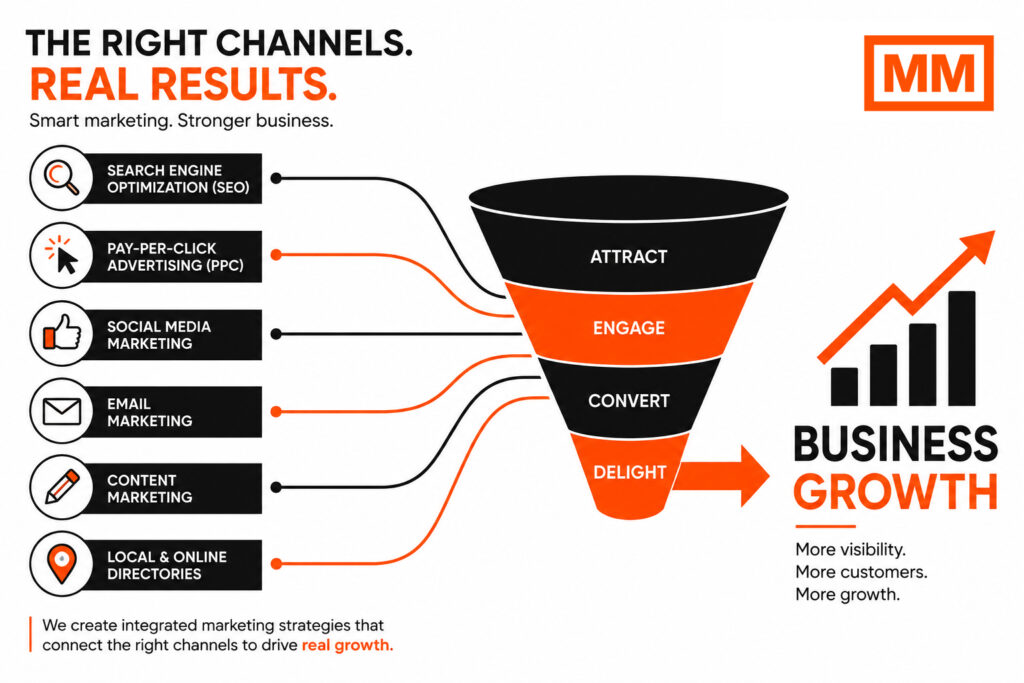
Digital marketing channels are the various online platforms and methods businesses use to connect with potential customers.
Some of the most effective channels include:
- Search Engine Optimization (SEO)
- Google Business Profile
- Google Ads
- Facebook and Instagram advertising
- Email marketing
- Content marketing
- Social media
- YouTube
- Local directories
- Online reviews
Each channel serves a different purpose within the customer journey.
For example:
- SEO attracts customers actively searching.
- Social media builds awareness.
- Email nurtures existing customers.
- Paid ads generate immediate visibility.
Understanding these differences helps businesses invest wisely.
Which Digital Marketing Channels Work Best for Local Businesses?
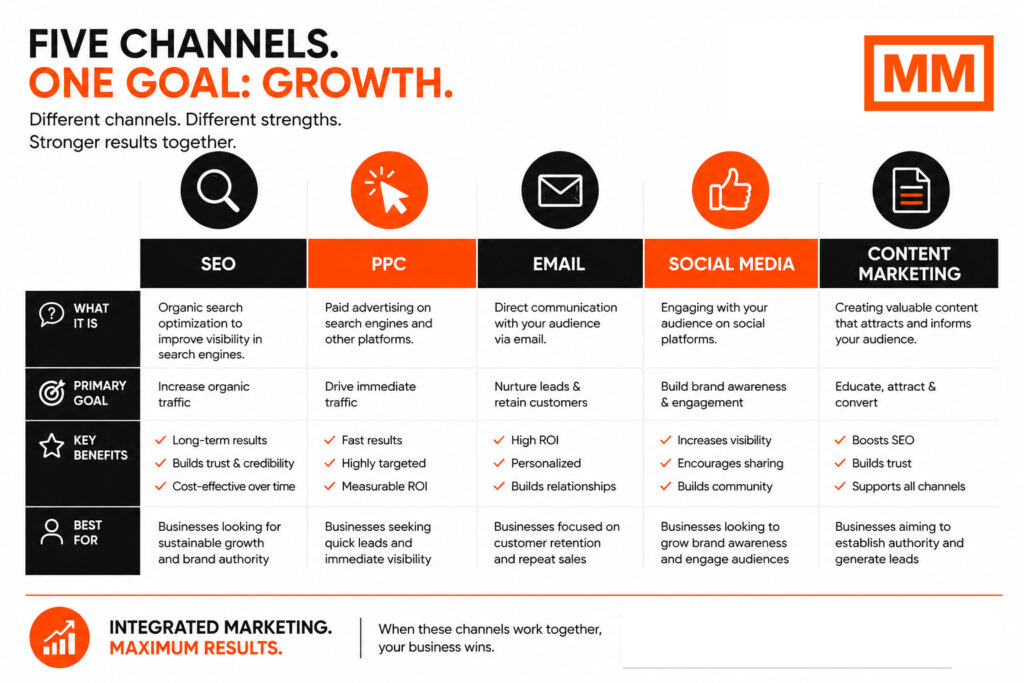
Not every business needs every marketing channel.
Instead, prioritize the platforms your customers actually use.
Local SEO
If customers search for businesses like yours that are near them, local SEO should be one of your highest priorities.
Optimizing your website and Google Business Profile helps you appear in:
- Google Maps
- Local search results
- “Near me” searches
For many service businesses, local SEO produces some of the highest long-term returns.
Example
A landscaping company in North Palm Beach may receive consistent phone calls simply by improving local rankings for services customers already search for.
Google Business Profile
Many customers never visit a website before making a decision.
Instead, they find:
- Reviews
- Photos
- Business hours
- Directions
- Phone number
An optimized Google Business Profile often becomes your first impression.
Regular updates and fresh photos also improve engagement.
Search Engine Optimization (SEO)
SEO helps your website rank for searches related to your services.
Unlike paid advertising, SEO continues working long after content is published.
Benefits include:
- Long-term traffic
- Higher trust
- Better lead quality
- Lower customer acquisition costs over time
According to BrightEdge, organic search drives 53% of all website traffic, making it the largest source of trackable web traffic for many businesses.
Content Marketing
Content marketing supports nearly every other marketing channel.
Helpful blog posts answer customer questions before they contact you.
Good content can also:
- Improve SEO
- Generate backlinks
- Build authority
- Increase website engagement
- Support social media posts
- Feed email newsletters
Think of your website as a library that keeps attracting visitors.
Each new article becomes another opportunity to appear in Google search results.
Email Marketing
Many businesses overlook email, yet it remains one of the highest ROI marketing channels.
Email works particularly well for:
- Promotions
- Seasonal campaigns
- Customer education
- Appointment reminders
- Repeat business
Rather than constantly finding new customers, email helps you stay connected with existing ones.
Paid Advertising
Google Ads and social media advertising generate immediate visibility.
They’re particularly useful when:
- launching a new business
- promoting seasonal offers
- testing new services
- entering a competitive market
Paid advertising produces faster results than SEO, although it requires ongoing budget management.
How Do You Choose the Right Marketing Channels?
Many small businesses spread themselves too thin.
Instead, follow a simple process.
1. Identify Your Audience
Ask yourself:
- Where do customers spend time online?
- Do they search Google first?
- Do they use Facebook?
- Are they active on Instagram?
- Do they respond to email?
Your audience should determine your strategy—not trends.
2. Define Your Goals
Different goals require different channels.
Examples include:
| Goal | Best Channel |
|---|---|
| Generate leads | SEO, Google Ads |
| Increase local visibility | Local SEO, Google Business Profile |
| Build trust | Content Marketing |
| Repeat business | Email Marketing |
| Brand awareness | Social Media |
| Immediate traffic | Paid Advertising |
3. Consider Your Budget
Every marketing channel requires an investment.
That investment may be:
- Money
- Time
- Expertise
SEO often requires patience.
Paid advertising requires consistent spending.
Content marketing requires ongoing writing and optimization.
Choose the mix you can maintain consistently.
4. Measure Performance
Good marketing decisions rely on data.
Track metrics such as:
- Website traffic
- Phone calls
- Contact form submissions
- Conversion rates
- Keyword rankings
- Cost per lead
- Return on ad spend
Review performance regularly and adjust your strategy accordingly.
Should You Use Multiple Digital Marketing Channels?
Absolutely.
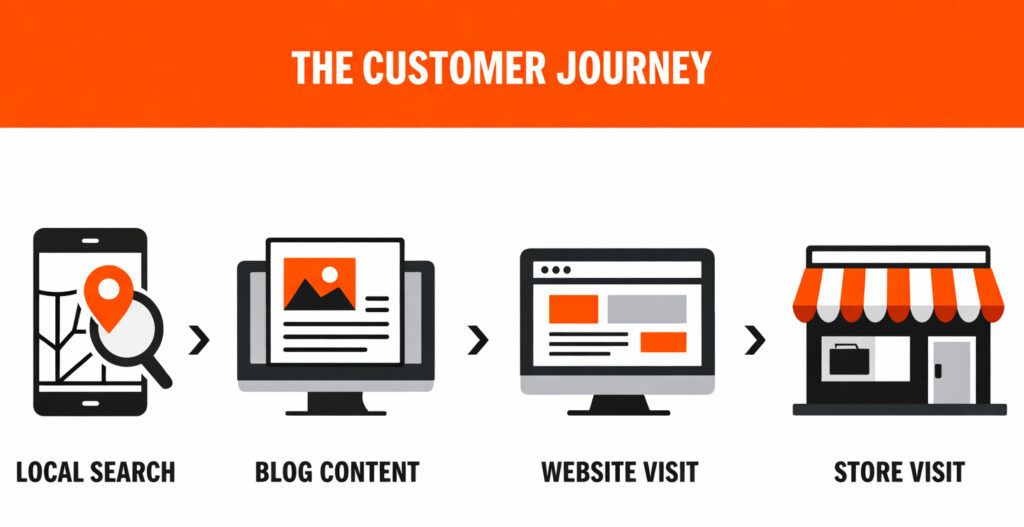
The strongest marketing strategies combine several channels that support one another.
For example:
- SEO brings visitors.
- Blog content answers questions.
- Google Business Profile builds trust.
- Email keeps customers engaged.
- Google Ads fills traffic gaps.
Together, these channels create a marketing system instead of isolated tactics.
What Mistakes Should Small Businesses Avoid?
Some of the most common mistakes include:
- Trying every new platform
- Ignoring local SEO
- Posting on social media without a strategy
- Running ads without tracking conversions
- Publishing inconsistent content
- Neglecting email marketing
- Failing to update their website
Consistency almost always outperforms chasing the latest trend.
When Should You Hire a Digital Marketing Agency?
Many business owners begin handling marketing themselves.
Eventually, growth creates new challenges.
Professional help often becomes worthwhile when:
- marketing takes time away from running the business
- website traffic stops growing
- advertising costs increase
- competitors outrank you
- you’re unsure where marketing dollars should go
An experienced agency doesn’t simply perform marketing tasks—it develops a coordinated strategy based on measurable results.
Instead of guessing which channels might work, you gain a roadmap built around your goals.
Final Thoughts
Choosing the right digital marketing channels isn’t about being everywhere online. It’s about being present where your customers are already looking.
By combining SEO, content marketing, local search optimization, email marketing, and carefully managed advertising, small businesses can build sustainable growth without wasting their marketing budget.
Focus on consistency, measure your results, and continue refining your strategy as your business grows.
Frequently Asked Questions
What are digital marketing channels?
Digital marketing channels are online platforms and methods businesses use to reach customers, including SEO, social media, email marketing, paid advertising, content marketing, and Google Business Profile.
Which digital marketing channel is best for small businesses?
It depends on your goals, but local SEO, Google Business Profile, and content marketing often provide the best long-term value for local businesses.
Should I use SEO or Google Ads?
SEO builds long-term organic traffic, while Google Ads provide immediate visibility. Many businesses benefit from using both together.
How many marketing channels should my business use?
Most small businesses achieve strong results by focusing on three to five complementary channels rather than trying to be active everywhere.
How long does digital marketing take to work?
Paid advertising can generate traffic immediately, while SEO and content marketing typically take several months to build lasting results.
Can I manage digital marketing myself?
Many business owners can handle basic marketing tasks initially. However, as competition grows, working with experienced professionals often leads to better results and a stronger return on investment.
Why Work with Misselhorn Media?
At Misselhorn Media, we believe successful marketing starts with strategy—not guesswork. We take the time to understand your business, your audience, and your goals before recommending the right mix of digital marketing channels. From local SEO and content marketing to paid advertising, website development, and email campaigns, we create integrated marketing plans designed to generate measurable growth. By combining technical expertise, creative thinking, and ongoing performance analysis, we help businesses build stronger online visibility and attract the customers who matter most.
Sources
Google Business Profile Help (https://support.google.com/business)
Google Search Central SEO Starter Guide (https://developers.google.com/search/docs/fundamentals/seo-starter-guide)
HubSpot State of Marketing Report (https://www.hubspot.com/state-of-marketing)
Mailchimp Email Marketing Benchmarks (https://mailchimp.com/resources/email-marketing-benchmarks/)